Wednesday, May 6, 2026
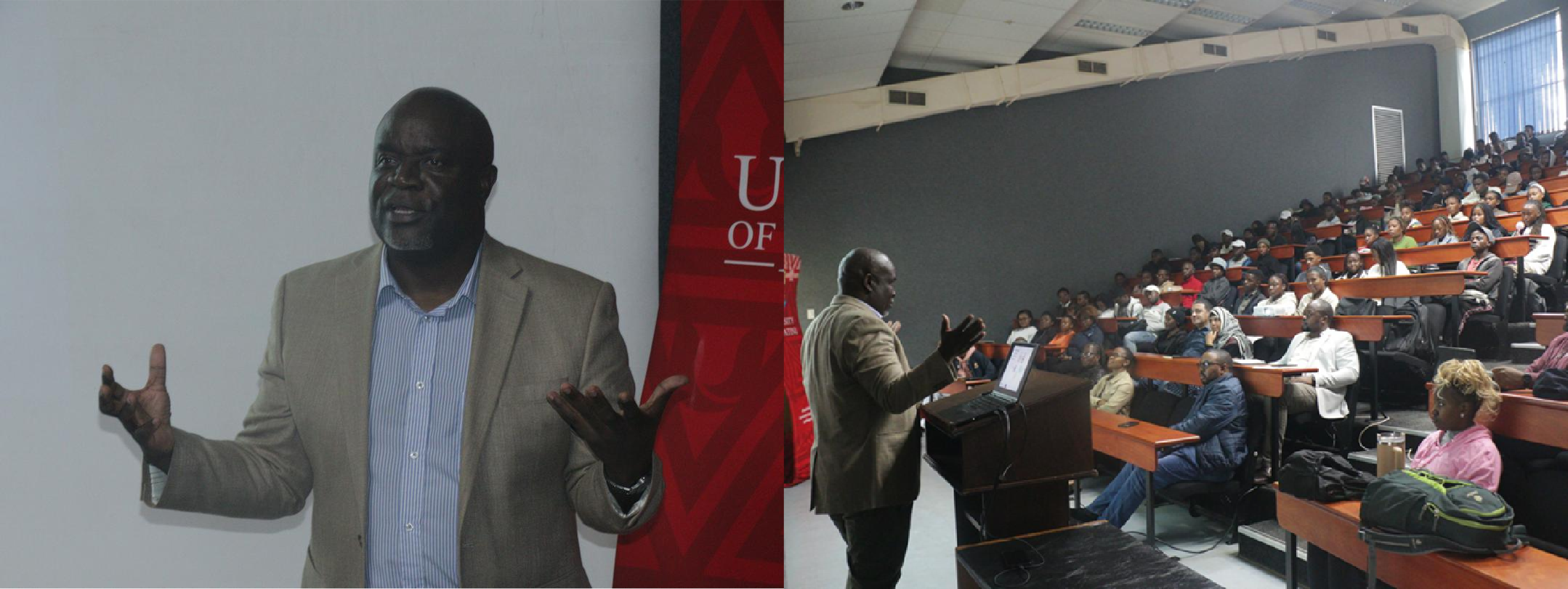
On Wednesday, 6 May 2026, the Faculty of Science and Engineering hosted an eye opening guest lecture on cybersecurity, artificial intelligence and digital resilience, where students were challenged to play a more active role in shaping Eswatini's cyber future. The lecture organised for Bachelor of Science students in Information Science (IS), Information Technology (IT) and Computer Science education was delivered by Professor Wallace Chigona. Wallace, who is a professor in Information Systems at the University of Cape Town and currently the Director of the Cybersecurity Capacity Centre for South Africa (C3SA), a regional hub that strengthens cyber resilience in Africa facilitated the engagement.
The discussion focused on how countries assess their cybersecurity maturity and preparedness against cyber threats using internationally recognised frameworks such as the Cybersecurity Capability Maturity Model (CMM). Students explored how countries evaluate dimensions including legal frameworks, technical infrastructure, organisational preparedness, cooperation, awareness and capacity development in determining how secure and resilient, a nation is in the digital age. Prof Wallace explained that cybersecurity is no longer only a technical issue, but a political, economic and social matter that requires collaboration across all sectors of society
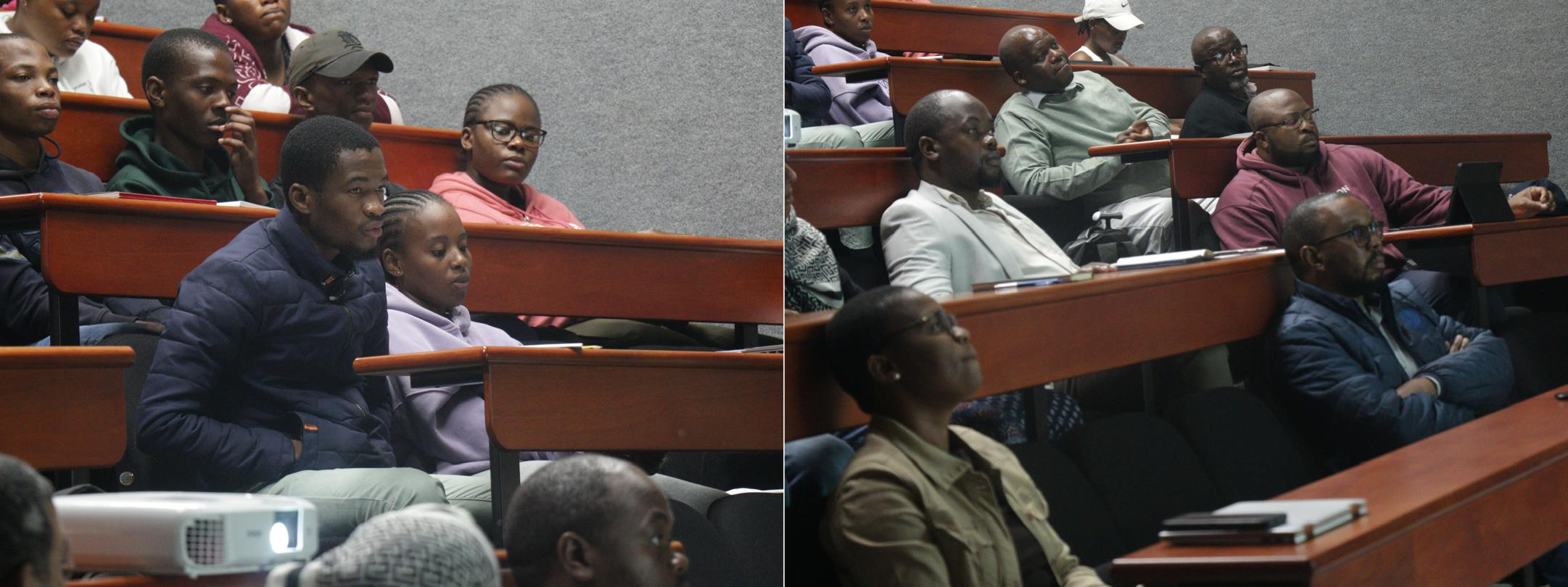
Students actively participated throughout the session, raising practical questions on how cybersecurity maturity assessments are conducted, who is interviewed during national assesments and how recommendations are developed after identifying gaps within a country systems. The lecture also examined the state of cybersecurity across Africa, with discussions highlighting that many African countries still fall below global averages in cybersecurity preparedness due to limited training opportunities, inadequate implementation of policies and insufficient political prioritisation of digital security. Professor Wallace noted that although several African countries, including Eswatini have begun developing cybersecurity frameworks and policies, implementation still remains a challenge.
Among the policies referenced during the lecture was the Eswatini’s National Cybersecurity Strategy 2022-2027, which seeks to strengthen national cyber resilience, improve incident response mechanisms and protect critical national infrastructure such as banking systems, telecommunications and government digital services. The lecture also reflected on the Computer Crime and cybercrime Act of 2022 which criminalises cyber offences including illegal access to systems, cyber fraud and data interference, as well as the Data protection Act of 2022, which regulates the collection and safeguarding of personal information.
Students were encouraged to appreciate the importance of protecting critical infrastructure, with examples highlighting the potential consequences should systems such as financial institutions or communication networks become comprised. Discussions further emphasised the need for countries to establish crisis management systems capable of responding effectively to cyber incidents before damage escalates. The Dean of the Faculty of Science, Dr Gcina Vilakati expressed appreciation to Professor Wallace and Eswatini Communications Commission (ESCOM) for creating platforms that expose students to practical and emerging issues within cyber security .He stressed that young people must not be excluded from conversations surrounding digital transformation, artificial intelligence and cybersecurity as they are the future custodians of technological systems and innovation.
The lecture also highlighted the shortage of cybersecurity programmes across African universities and called for increased investment in training and capacity building. Students from non-technical disciplines, including education, humanities and economics ,were also encouraged to engage with cybersecurity issues, as cyber awareness affects every sector of society .Students describe the engagement as impactful and practical, saying it helped bridge the gap between theory and real world cybersecurity challenges affecting countries globally and within Africa.
The session concluded with a strong call for greater awareness, stronger implementation of existing policies and increased youth participation in cybersecurity discussions to ensure Eswatini is better prepared for the evolving digital land.